The Lonely Crowd invited me to contribute to their Books of the Year feature. Here’s what I wrote:
I’ve very much enjoyed some of this year’s Big books: Lucy Ellmann’s Ducks, Newburyport demonstrates how the full stop might actually be getting in the way of the energy of many a story, Ali Smith’s Spring examines frankly the awfulness of our times and conjures heart-rending tenderness in spite of it, while Bernardine Evaristo’s Girl, Woman, Othercelebrates Black British women with a vitality and rhythm that is all her own.
But the book which stands out for me in what I’ve read in 2019, over and above these giants of the literary world, is Adèle by the French-Moroccan author Leïla Slimani, the 2019 English translation of her first novel, originally published in French in 2014 as Dans le jardin de l’ogre. I devoured this one afternoon back in March and it locked onto something in me. As an exploration of a woman’s search for meaning in her life this is – in my opinion – peerless. If once or twice Sam Taylor’s translation juddered, for the most part it was crystalline. Do not think this novel is about a sex addiction; it is about a quest for authentic feeling. Adèle is a 21st century Emma Bovary, and Leïla Slimani’s book deserves to be read as widely and remembered as long as Gustave Flaubert’s.
This is a little story which I started in Italy in May, in the wonderful flash fiction course with Kathy Fish, Nancy Stohlman and a bunch of other talented writers. Here’s the beautiful soundtrack which inspired it and from which it takes its title:
Underneath the Stars
Cath Barton
He still looks for her at the tail end of the day, our old grey cat, Merlin. Sitting at the top of the steps, outside our front door. Watching the bend in the road. Watching and waiting for her battered old Ford Fiesta to appear round the bend, her tooting and waving to tell us she’s home and calling out to me to put the kettle on because:
‘I’m dying for a cup of tea!’
That was Marie-Louise. She was greedy for life.
She brought cakes, always a little sweet something. But now the days of our feasting are done and it’s quiet day and night in Silverdale, in the quicksilver light of the moon and the rarely-now-golden light of the sun.
For they closed the road off.
Marie-Louise would not have wanted that, would have insisted that the va-et-vient should continue. For she loved the rush and fall of things.
Merlin’s still sitting looking, still hopeful, as the silvery sheen of his coat merges into the dusk. I call him and we go together into the back garden. We sit by side, noses twitching to catch the sinuous waft of night scents as, above us, the map of the heavens unrolls. There’s the whoosh of a train down in the cutting but Merlin doesn’t stir.
I point. ‘She’s up there,’ I whisper in his ear.
It’s a blind hope. I can’t read the night sky any more than I could read her mind or understand her crazy impulses.
Merlin’s ears prick now and he darts after some little creature invisible to me in the fading light. Something snuffles near the railway tracks. A fox maybe, or a badger. I call Merlin back from danger. He comes and he sits, quietly, close by me. And I nuzzle his soft back.
NEWS! I’m going to include this story in a collection of short fiction and photographs which I’m putting together with my husband and fellow writer, Oliver Barton. It’s called Candyfloss III. Yes, it’s the third in a series, though there’s been a bit of a gap since the last one. You can still buy Candyfloss II here.
We hope to have Candyfloss III out in January. All profits will go to local charities where we live in Abergavenny. And it will be available to buy directly from us. You’ll hear about it here first.
This year there was a book by a Tasmanian author on the Not the Booker Prize shortlist. I thought it was about time I found out a bit more about Australian fiction writing, and invited the author Lindsay Bamfield to write a guest post for me.
Lindsay relocated from London to Melbourne six months ago. She writes short stories and flash fiction and has two stalled novels needing attention.
Here are Lindsay’s recommendations. Do add your own in comments.
Mining for Australian Literature
Lindsay Bamfield
Moving in to my new home in Australia, I set up a couple of Australian literature shelves in my bookcases. To accompany my battered copy of A Gold Digger’s Diaries by Ned Peters (my great-great-great-great-uncle!) were novels by writers I’ve read before, including Tim Winton, Jane Harper and Kate Grenville. Following Ned’s example of gold mining I mined for new literature. I browsed bookshops and, most importantly, joined my local library and found books encompassing Australia’s many cultures from a number of Australian authors writing a huge variety of characters and settings in an equally wide range of literary styles and genre.
I’ve read hard-hitting short stories by Tony Birch (Common People and The Promise), found the fictionalized story of Louisa Collins, The Killing of Louisa by Janet Lee fascinating and, to be honest, read several others that I didn’t rate very highly. The following, all from writers I hadn’t come across before, stood out for me as good reads.
Peter Polites’ The Pillars is a contemporary urban story of a gay man of Greek heritage. Vibrant, urgent and often dark, it is a story of the outsider. Covering racism, homophobia, greed and the ever-changing face of cities, it focuses on fitting in as the pillars of society crumble for new ones to emerge.
In contrast, Milk Fever by Lisa Reece-Lane is set in a small country town named Lovely. For newcomer Julia it’s anything but lovely. Overshadowed by her controlling husband she is drawn to Tom, a young farmer who experiences life and the surrounding countryside through nature’s colours and vibrations. I loved this gentle story of people at odds with their family members but ultimately at one with their environment.
Kate Richard’s Fusion is set in the remote wilderness where conjoined twins Sea and Serene live in self-imposed seclusion with their cousin, Wren. Self-educated, their life is richer than their circumstances might suggest. When Wren finds an injured woman on a lonely road, he brings her home to tend to her injuries and all three find their relationships are tested. An unusual and lyrical read.
Shepherd by Catherine Jinks, perhaps better known for her children’s and middle-grade literature, is the story of a young convict transported to Australia for poaching. Working as a shepherd for a settler he becomes the target for another convict, a vicious murderer. Can he outwit his pursuer? I found this fast-paced story fascinating.
Extinctions by Josephine Wilson tells of widowed Frederick Lothian, a retired engineer coming to terms with his future in the detention centre for the elderly as he calls his retirement village in Western Australia. Touching on the big issues of identity and the Stolen Generation, Fred meets Jan a fellow member of the retirement village whose blunt approach makes him confront his mistakes from the past and how they have affected his son and adopted daughter. Often witty and sometimes light it is also a serious thought-provoking read that I was sorry to have to return to the library.
Photo copyright Lindsay Bamfield
Coming next: Friday story and preview of Candyfloss III
I’ve been pondering on flash fiction. This month I’m writing some every day. Here are a few thoughts about the process:
– It’s a useful exercise to use a prompt just to get the creative brain firing. Simply setting words down.
– A strict word limit can produce unexpected juxapositions. As in this micro I wrote this morning using Meg Sefton‘s prompt crisp for 50 word fiction:
First frost and the white ground is calling to me to imprint it. I run alongside tracks of mice and vole, earlier risers. Breath of dogs fogs the air, the shouts of their people boom and retreat. The colours of this time of day are muted, waiting for sun stroking.
I don’t think I would have come up with ‘sun stroking’ if it hadn’t been for the constraint of the work limit.
– Collaging the fragments which float out from my brain in response to different prompts may show up connections.
-At this stage this is all raw material, which I will return to later, to cut, shape and stitch into finished stories.
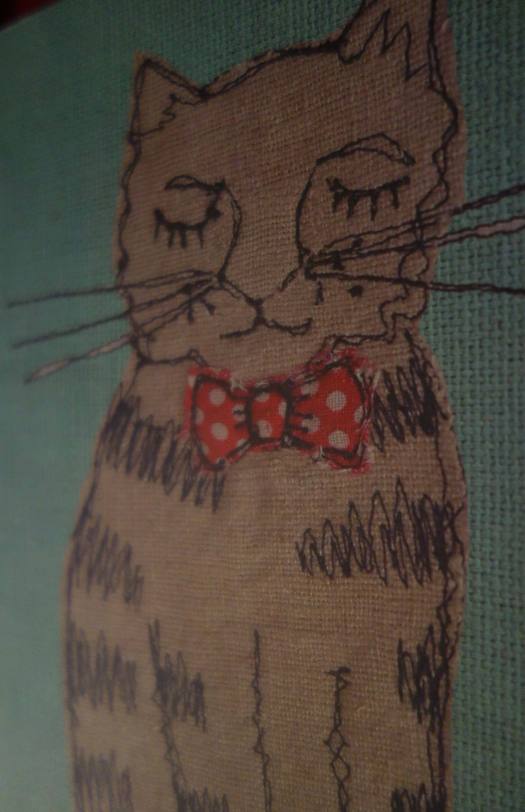
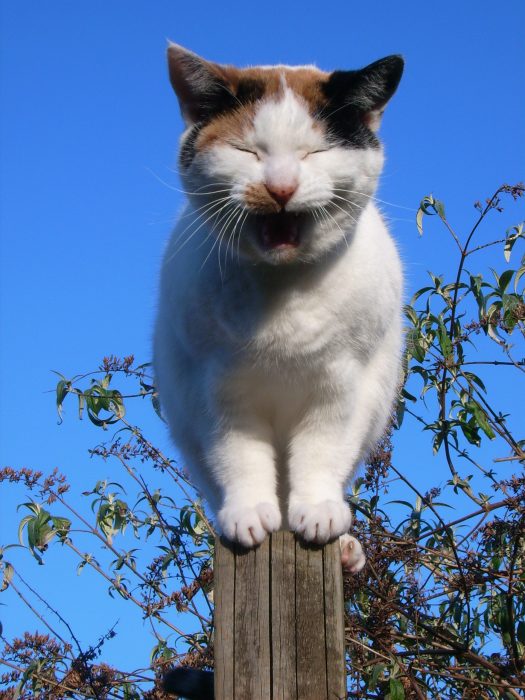
And here’s a picture, which could also be a writing prompt…..
Last year I took part in NaNoWriMo. That was fun and gave me lots of material to work on.
This year I’m back to FlashNano. Nancy Stohlman gives great prompts every day during November. You can use these as you like – for me they are so useful to get my writing brain going, and the little stories I start here may bear fruit later – who knows?!
I’m also using prompts from Meg Sefton to write a 50-word micro each day in November, posted on Twitter with the hashtoag #50FlashNov19. Another little brain workout.
Here are a couple of the micros I’ve written so far:
Day 1 – prompt #ripe
I scan the room. Grey suits, haggard faces, the smell of age. I should never have trusted the photograph. The line is so fine between fullness and the slide into the decay. There, he’s waving. I recognise the eyes. But the flesh is weak. Mine that is. I turn away.
Day 5 – prompt #cat
They said they had to keep us in for three weeks. My sister and I had no say in the matter. They said we were feral. I have no idea what that means in human, but when they finally let us out we climbed over the house. To show them.
Huge thanks to Nancy and Meg for sharing the prompts.


 Cath Barton