You may know already that Louise Walters is closing her publishing company at the end of June. This will be a huge loss to the world of independent publishing. She has been indefatigable in her support of her authors over the past 6 years, but everyone has their limit.
There is much to say about this, but for now I just urge to take advantage of last opportunity to buy from Louise Walters Books. All her books are on sale from her online bookshop with a 25% discount until the end of June. After that, they will no longer be available.
Maybe you already have my book, In the Sweep of the Bay. Maybe you have all the other books Louise has published. If so, thank you, that’s great, but now you could do one or more of the following:
buy a book for a friend
ask your local library to buy one or more books – or a set for bookclubs. If their budget does not permit this, you could buy one or more yourself and donate them.
spread the word on social media
tell your friends who don’t use social media
This is not about me wanting money. This is about me wanting to support excellence. And it’s about kindness. Something that is easily forgotten in the world of publishing.
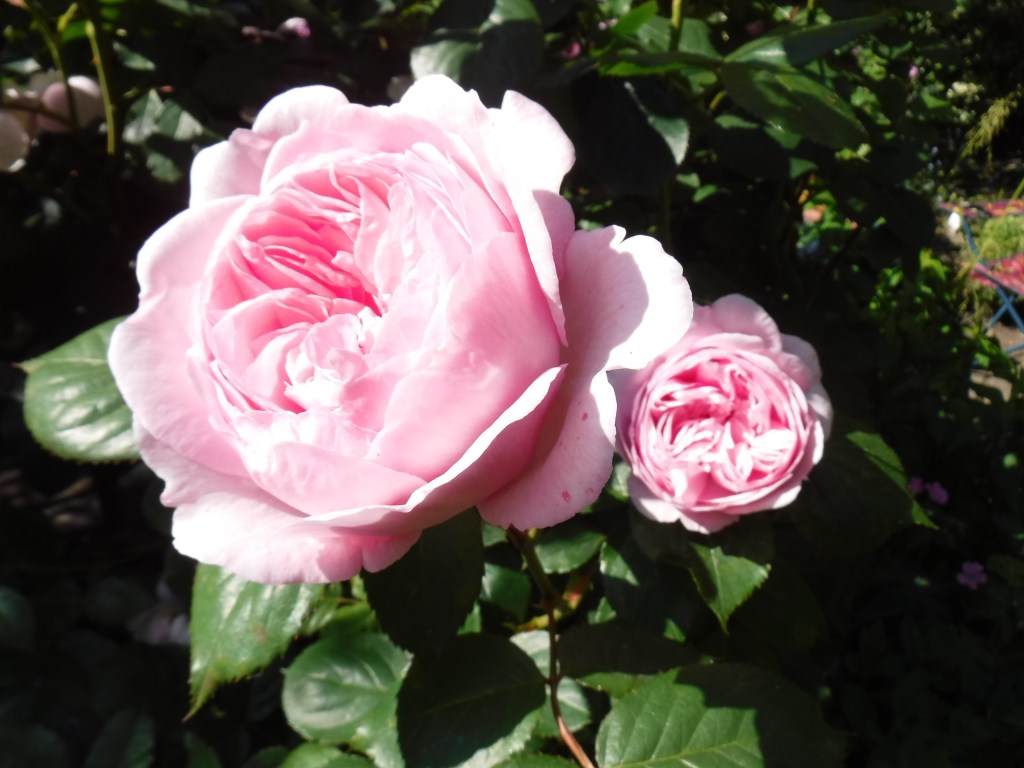
I leave you with a rose from my garden. Thank you for reading this and take care.
In the last of my current series of guest posts from authors with new books out, a big welcome to Drew Gummerson with his thoughts on that most crucial aspect of writing – the editing process.
Certain books, written quickly, are infamous; Jack Kerouac’s On The Road, dashed off while on the bog, written in a cramped hand along the length of a single roll of toilet paper(*), Charles Bukowski’s Post Office, 2 weeks in the making, squashed between Bukowski’s bar brawls and unsuccessful attempts at picking up Women(*), (his next book, 3 days later(*)).
(Sequestered once in hotel room Bukowski refused to appear on same bill as one and only Burroughs, William (now he was editor; cut text with scissors, scatter text across floor, shoot heroin, piece text back together. For many years Burroughs carried pages of Naked Lunch (deconstructed / constructed) gripped with single elastic-band in suitcase across Paris / Tangier / Interzone.(*))
But for most of us, as Morrissey sang, These Things Take Time.
(And I know that I’m the most inept that ever stepped…)
The best advice I ever got about editing came backwards through a crude joke on The Inbetweeners. This crude joke was about having a numb hand and masturbation.
It’s better all round if you no longer feel it’s yours. (**)
When I finished the first draft of Seven Nights at the Flamingo Hotel I put it away for six months.
It was only then I had the right perspective to be brutal, see what worked / what didn’t. So I could slash and burn. And, I honestly couldn’t remember where it was going.
It was fresh.
And that’s where the real work started.
In this excellent New York Times article, Jenny Offill talks of how she put extracts of her new novel Weather onto poster-boards and it was only, through time, by looking at them, she could ascertain which ones sparkled, which ones weren’t merely clever.
In that first draft it’s all too easy, like Alice falling down her well, to be pleased with yourself. Time gives clear head to tidy up (delete) these sections which don’t sparkle, aren’t clever (I mean, who wrote this shit?).
On twitter Ronan Hession (writer of the wonderful Leonard and the Hungry Paul(**)) gave the Sound Advice of, when editing, to read the chapters in reverse order. This,
“1. Stops you getting distracted by the story.
2. Reveals a lot about flow… if a book reads well backwards it’s a good indication that it reads well forwards.”
Same as putting text away in drawer it is about finding a different way of looking / disrupting gaze.
His editing process was to write reams and reams of stuff trying to find the character. It was only by writing in character’s voice that the nuggets of genius that made it into the story came out.
Seven Nights at the Flamingo Hotel was written on my iPhone, sitting at my kitchen table, most often before I went to work. Just an hour or two.
Having once been an obsessive writer I made a deal (with myself) a number of years ago that I would keep my evenings free for movies, music, books etc etc etc (wine).
In those few hours, like Offill I ended up with many dozens of pieces / fragments / sketches.
The trick was to work on them work on them work on them and, as Saunders suggests, find the heart of what you are trying to say.
(*) – This is not exactly true.
(**) – This is exactly true.
Drew Gummerson is the author of The Lodger and Me and Mickie James. His latest book, Seven Nights at the Flamingo Hotel, is to be published in November 2020 by Bearded Badger Publishing
In the latest in my series of guest posts from authors of new books, Dominc Brownlow discusses how, in his writing, he uses location as more than simply a setting.
Location, surprisingly, is often underused in writing. All books and stories possess one or more of them; characters can’t simply float through space, levitating from one scene to the next. They must be placed somewhere, like actors, in order to play out the intended narrative, but once that stage has been decided upon, the backdrop painted, the curtains raised, the role of that setting should not then be over. Location should be treated as a character and accorded the same luxuries. And, most importantly I think, used as one of the senses.
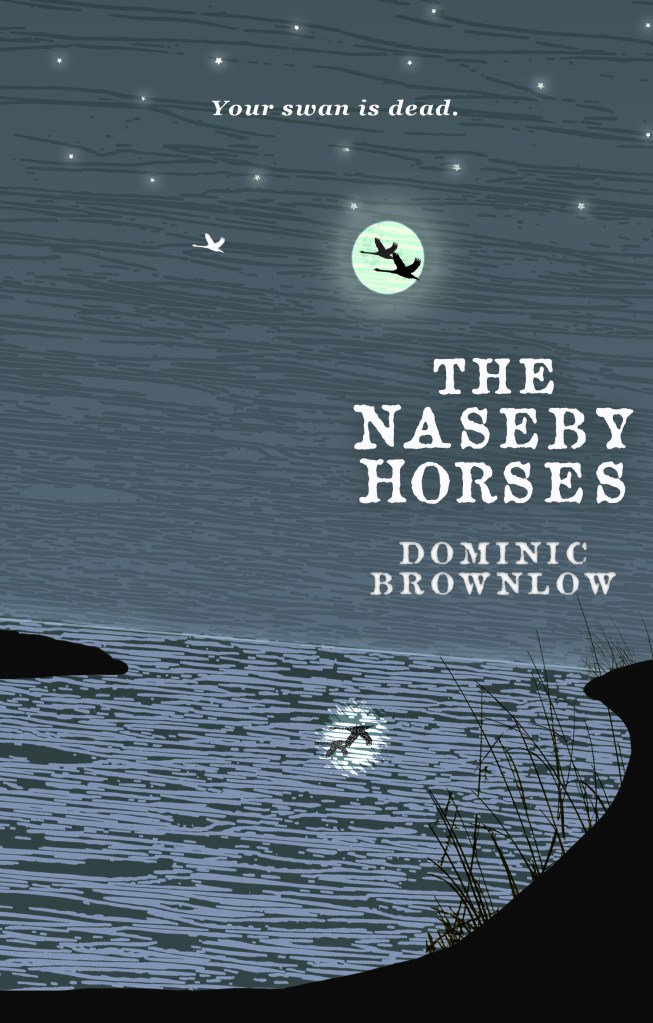
When I wrote The Naseby Horses I had a post-it-note above my desk reminding me not to ignore these essential faculties: touch, smell, colour, sound. It is still there now as I write my second novel, the ink a little faded from the sun. Isolation is a fundamental aspect of my writing – I’m only on novel two but they are both centred around this theme.
For me, it is the Fens; huge open swathes of flat agricultural land stretched beneath wide infinite skies. That, in itself, is fairly self-explanatory. It is an obvious stage for remoteness. However, it is the perceptions evoked beyond remoteness that can, if you invite them in, assist the story so. It is the way both the landscape and its inhabitants behave; the attitude of locals, the manner in which nature and wildlife react, and how this effects, or is used by, the characters in the novel.
The same method could be employed with a major city, or beach or mountain or alien spacecraft. All these locations are in possession of sound, smell, colour, touch, as, similarly, is a kitchen, bedroom, school, garden, sports field or courtroom. By introducing the sensual nuances of a location a writer is, by default, connecting the character to that place, and, in the same metaphorical vein as how pathetic fallacy works, eases these perceptions into the subconscious of the character and, hence, reader.
“Show not tell” is the axiom waved about like Colours in the How To Write books, and one, as a literary waffler, I struggle with the most. However, by describing the mood and essence of a setting, wherever that may be, as long as an initial connection has been made between place and person, the writer is, in part, showing not telling. He, or she, is using location as the shadow of the character. One of my favourite lines in The Naseby Horses is ‘somewhere in the distance sunlight glares off a moving car.’ I like to think this issues a latent sense of escape from a desolate backdrop, without actually saying it.
John McGregor’s Reservoir 13 uses this brilliantly and, of course, the ultimate example of how to use location as a character is Hemingway’s The Old Man and The Sea. Ray Robinson is also a modern day master of this in The Mating Habits of Stags, and for the claustrophobic seedy panicky senses of the city Martin Amis’s London Fields excels beyond all.
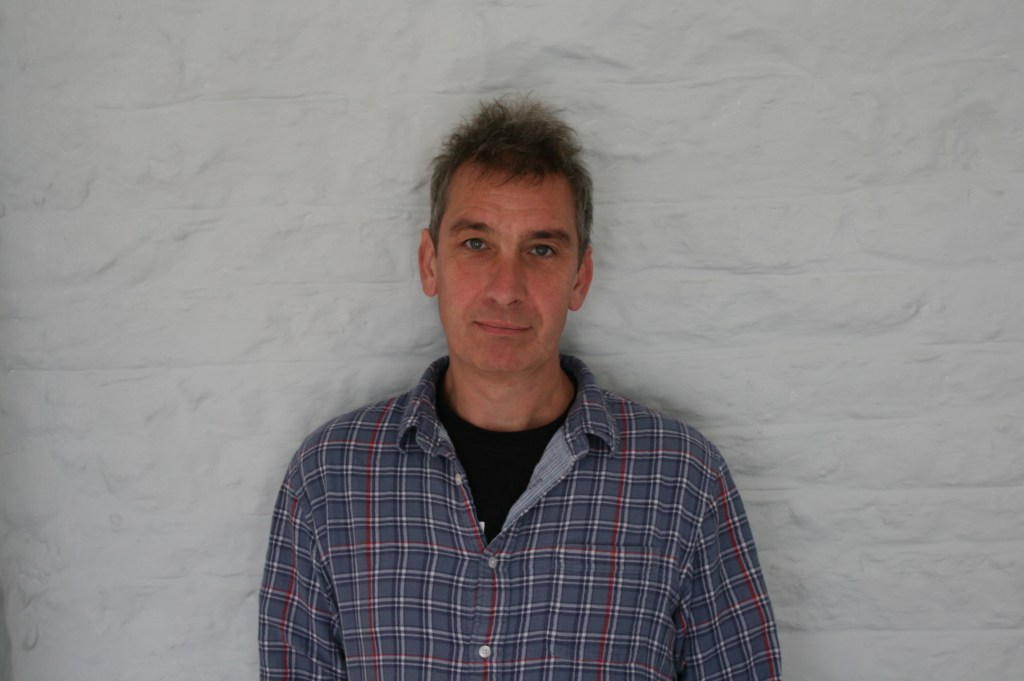
Dominic Brownlow lives near Peterborough with his two children. He lived in London and worked in the music industry as a manager before setting up his own independent label. He now enjoys life in the Fens and has an office that looks out over water. The Naseby Horses is his first novel. It was long listed for the Bath Novel Award 2016. The paperback edition is published on 24 August 2020. He tweets @Dominic Brownlow.
In the second of a six-month series of guest posts from authors of new books, Ali Thurm introduces us to her writing life:
Where I write
Six months ago I moved from a large family house where I had my own ‘writing room’ to a flat. Apart from when my daughter comes home from university, I now have a whole flat to write in. I can write wherever I want.
I need to see real people, especially working on characters, so my pc is set up in the bay window overlooking the street. I sometimes use my laptop at the back of the flat, where I can see the garden. It’s completely secluded but as I’m also passionate about gardening the temptation to go out and do something/anything in the garden can get too much. Like a restless child desperate to go out and play.
What’s on my desk
Sharp HB pencils and biros (Paper-mate Inkjoy). A visual reminder of the tools of being a writer, and a remnant from my days as a primary teacher. I love sharpening pencils – a preparing (some might say delaying) strategy – the smell takes me right back to a summer working in the Cumberland Pencil Factory in Keswick.
AChristmas cactus with Barbara Cartland shocking pink blooms once a year.
An almost spherical glass paperweight full of bubbles.
My prize possession – a Howard Hodgkin postcard Bombay Sunset with stripes of gorgeous orange, red and green signed by Julian Barnes. A reminder that all writers are human; and how good it is to connect with writers you admire and future readers who’ll enjoy your own writing.
How I write
When I’m at the first draft stage, generating new writing, I write long hand in an ordinary notebook with a biro or pencil. I write the scene I’m most interested in at the time. For me there’s something about cursive writing – the fact that letters are joined together – that makes new writing flow more easily than the staccato tap-tapping on a keyboard. This kind of writing can take place anywhere – train, café, park (pre-lockdown). At home I sit on an old 1920’s sofa with a drop-down arm so I can recline like Elizabeth Barrett Browning.
Editing is all on screen – I’m on the third draft of what is actually novel number three, so at the moment I’m mostly at the pc.
When I write
A typical day starts by a walk around the garden (it’s a small London garden so that doesn’t take long!) looking at the natural world and breathing in fresh air. If I’m on a roll with my writing I might head for my desk at 8.30 but usually I work 10 – 1 then 4 – 6. The afternoon is for exercise (yoga, walking, swimming and gardening). The evening for friends/family and reading or films. But there’s also volunteering – a writing club for children and community gardening – and Twitter of course. There isn’t really a typical day!
And in this strange time
During lockdown I struggled at first to do any writing apart from a few writing exercises of 10 minutes a day and spent a lot of time out in the garden or on the phone to friends/family. For the last few weeks I’ve started editing my novel The River Brings the Sea, a dystopian story of a group of people surviving in West Cumbria after a catastrophic flood. You can see why it’s been difficult to pick up where I left off, and I’m not sure how many people will want to read it after surviving Covid 19. But it’s a hopeful narrative where kindness and community spirit win in the end.
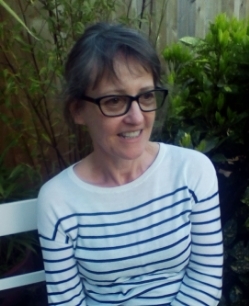
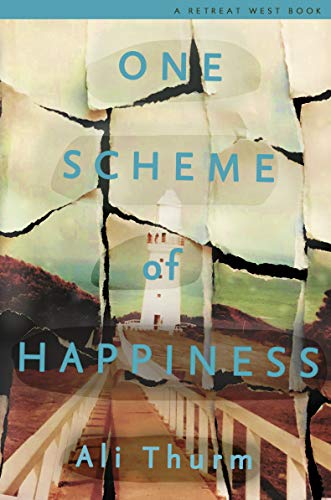
Ali Thurm is a novelist, poet and teacher. After balancing a career in primary teaching with writing part time, she was taken on by the literary agency Emily Sweet Associates in 2016. Her debut novel, One Scheme of Happiness was published in February 2020 by Retreat West Books. You can follow Ali on Twitter @alithurm and her website is https://alithurm.com




 Cath Barton