A Ghost Story for Christmas

Here’s a little story for you. I hope you enjoy it.

Wishing you a Merry Christmas

Christmas Tidings

by Cath Barton

‘Holy smoke and Hell fire!’ Canon Barabbas Pylon was not having a good morning. Only a week till Christmas and he was struggling to get the festive parish newsletter out. The broadband connection in Little Snittersford was unreliable at the best of times and now his computer had crashed.

Canon Pylon peered out of the window of his study in the vicarage and up at the bulk of the Church of The Holy Innocents. There was something amiss, but he couldn’t understand for a moment what it was. It did seem to be a very gloomy morning. Ah, he realised, the star on the top of the church tower which was supposed to be illuminated was not. Neither were the fairy lights adorning the trees bringing light into the midwinter darkness as they should be.

‘Holy Mother of God!’

He immediately felt remorse for his blasphemous utterance, and impelled to go across to the church and make recompense through prayer. While he was there he would investigate and find out if a switch had been, unaccountably, tripped. As he stepped out of the front door of the vicarage he saw a man ahead of him on the path to the west door. The man was dressed in tight-fitting black garments and had crampons on his shoes. This did not surprise Barabbas Pylon, who had encountered stranger people by far during his travails in the service of the Lord.

‘May I be of assistance?’ he enquired of the man as he drew level with him, inclining his head obsequiously to the left as was his habit. The man gave him a blank stare. The Canon immediately wondered whether the man was on drugs. The churchyard, with its concealing yews, was a Mecca for such people. He stood watching as the man continued walking, arrived at the west end of the church and began to ascend the tower.

‘I say–’ he called to the man. ‘I say, you really can’t –’

But it was clear that the man could, and that he was climbing the vertical face of the twelfth-century tower with ease, thanks to the crampons. Canon Pylon hurried over and stood below the man, ineffectually waving his arms and calling out. But his reedy warble was drowned by the caws of the crows which encircled the tower of the church, the more so as they saw the man moving towards their nests.

The man quickly reached the first gargoyles. It pleased Canon Pylon not a little to see that the beasts had woken and that their spectres were spitting on the intruder, who was ducking in a futile attempt to avoid the bile of ages issuing from their ghastly gaping mouths.

‘Go boys!’ cried the excited Canon, though Bill and Ben – as he affectionately thought of them – needed no encouragement.

It was clearly a pleasure to them to have this large and relatively slow-moving target; generally they had only the crows to spit upon, which evaded their venom with ease and shat upon them copiously in revenge while they were asleep.

However the man, although somewhat splattered with the gargoyles’ vile-smelling and vivid poison, was apparently undeterred. He had climbed on so that he was now level with the second course of gargoyles which, although smaller, were renowned as being even more vicious than Bill and Ben. This gang of medieval ruffians had been known – or so it was rumoured in the parish – to descend at night and roam through the churchyard, issuing hideous alarums which entered into the hallucinations of the druggies injecting on the tombstones of the innocent dead.

These gargoyles were of course, in the same way as all so-called mythical beasts, able to fly about as they wished, although they generally refrained from doing so in the daytime. Now, though, they rose as one and flapped their great wings in the face of the man who had, uninvited, entered their kingdom.

To Canon Pylon, way below, the sight was no less than revelatory. He was in daily expectation of the Second Coming and here it was, in the shape of a blank-faced crampon-wearing drug addict arousing the beasts of the apocalypse. Would the sky now be rent asunder and God appear before him in a bolt from the blue? Would he be judged there and then and his sins broadcast from on high to the parish?

The Canon waited. No lightning bolt came. The flapping ceased. The gargoyles above settled back into their customary solid slothful attitudes.

The man disappeared from sight. Ascended into heaven, then, thought Canon Pylon. He returned to the vicarage for lunch and took with it a small glass of sherry, in celebration of the momentous event. He fell asleep in his chair and dreamed, for once, of angels rather than his habitual demons. When he woke and looked out of the window he saw that the star on the church tower was once more illuminated, indeed was rather brighter than before.

The Canon found, when he turned his computer back on later that day, that his broadband speed had, after months of fruitless attempts to contact the authorities, suddenly increased dramatically, and the sending out of his newsletter took only moments. Feeling at peace with technology and his Lord, he opened a new document and began to draft his sermon for Christmas morning.

‘It has long been known,’ he began, ‘that there would be miracles associated with the Second Coming of Christ. Let me share with you now the miraculous events which have taken place –’

He paused, hearing a sound on the stairs of the vicarage. It was a scraping sound, such as would be made by someone wearing crampons on their shoes. The sound was coming closer, and now the handle of the door was turning. Barabbas Pylon rose from his chair. He was ready.
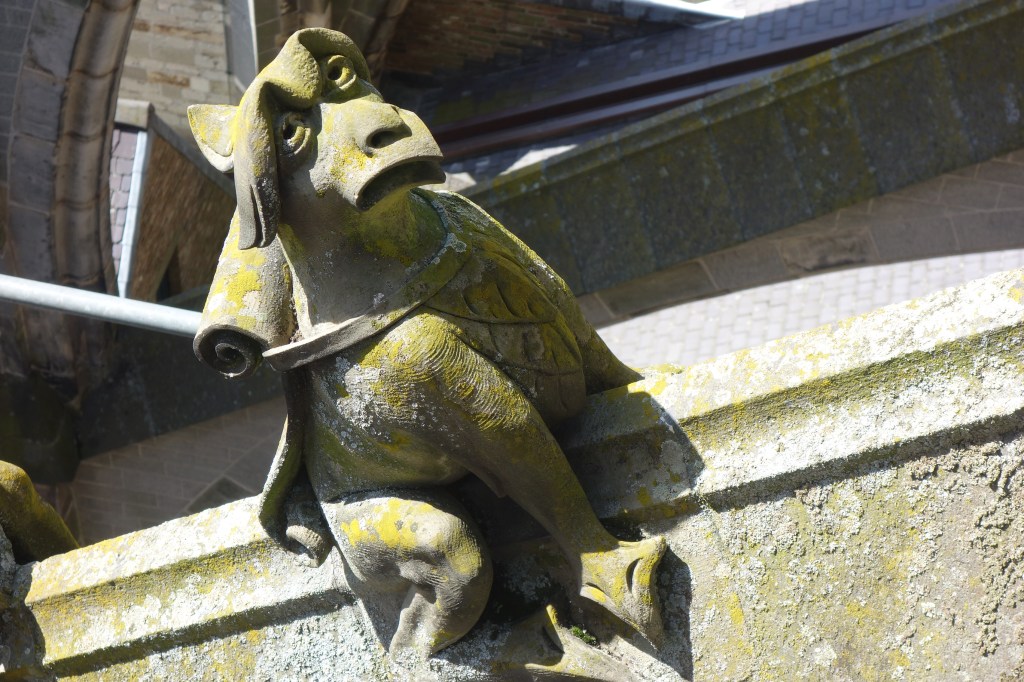
Photo by Cath Barton

New year writing competition: The winning story

Why I chose this story: It conjures a world so well and Sarah’s fun in writing it shines through. To me it was the most complete story amongst the entries, with compelling imagery and poetic cadences. Most of all I love the ending.

Stormy Trees and Wounded Wings

by Sarah Oakes

When Skaldir entered the maelstrom, he hadn’t been sure what to expect.

Clouds of every colour surrounded the ship, thicker than dreams, as thunder boomed and lightning snapped, and he worried the ship wouldn’t make it.

With sails buffeting and wood creaking, he made his way through the churning centre, into the eye, into the unknown, a whirlpool where the wind held its breath, waiting to explode.

Its core took his breath away, like nothing he’d ever seen. A dragon curled around a great tree, its sapphire body bedazzling against the grey bark. It seemed impossible. But there the tree stood, with its ripe apples as bright as emeralds, high up in the clouds, in its verdant glade. It was scored with scars, and one knot formed an eye, that stared out, and he wondered what it saw.

Back home, they would have said it was Odin’s eye, a lucky sign. He hoped so. They hadn’t had much luck of late.

The dragon shifted, scales rippling, claws scraping bark. And as it did, Skaldir saw why it hadn’t rained. Deep scars riddled the wings, wounds as wide as a craters, blisters blossoming with every move.

It snarled as he approached, but he let it. Carefully, Skaldir anchored the ship to the tree, sails billowing, wood wobbling, and fetched every salve he had.

“I can help you. If you’ll let me.” He wasn’t afraid.

“You are brave to come here.” It said, voice as deep as a fjord. “You have a kind heart, that I see. Please. It hurts. I cannot fly.” A sob echoed in its words, and tugged his heart. He nodded. He knew what he had to do. For every rune has a rhyme, every route a reason.

He applied the salve gingerly, rubbing it into the vast wings as best he could. And for the next few days, he continued, chanting runes, singing songs, spreading salves. They shared stories and apples, as time passed and wounds faded. On the sixth day, the dragon flapped its wings, ready to fly.

“Thank you.” It said, nuzzling him. “Now I can fly again!”

“Go on.” He said, excitedly. “I’ll race you.” The dragon laughed.

He rushed to the ship, quickly loosing his anchor, waiting for a sign. With a roar, the dragon took flight, scales shimmering, wings thundering, soaring faster than a hurricane, and as his ship followed, the rain began to fall.

Sarah Oakes is a visually impaired science fiction and fantasy writer who loves music, mythology, and plays the clarinet. She has had one short story, three poems and many flashes published, both in print and online. Her work can be found in The Microlit Almanac, The Failing Writers Podcast, Bubble Lit Mag, Fictionette, Voidspace Zine, Pure Slush, Wishbone Words, Sixpence Society, FromOneLine, and National Flash Fiction Day.

New year writing competition: The winning stories – joint runner-up 2

Why I chose this story: It’s really well-paced – a bit breathless, which is so in keeping with the narrator’s emotions. I love this phrase: ‘the roots wefting and warping across the forest floor.’

When will you be done?

by Louise Witts

She’d struggled to find it. The late summer light was fading and the woods more overgrown than ever. She could hear her husband’s voice telling her to be careful… laughing that new hips were expensive. That made her smile. He’d had his hips and knees done. Bionic, according to him. She shined a torch onto the roots wefting and warping across the forest floor. One step at a time, she reassured him. It would be 10 years this September. Sudden. Was that better? Better for him, maybe. But for her? Who knows? You think losing somebody another way may be easier but you’ve still lost them. You can’t turn back time. That made her laugh. Because that’s exactly what she was trying to do. Turn the clock back 50 years to when she’d last sat under this tree. This gnarled, ancient tree that was no more or less remarkable than the others, except it was where they’d sat. Not her husband, she’d met him later. No, this tree was where she and her neighbour… her best friend… had played and hid and laughed and, finally, kissed. He was her first kiss and recently she’d remembered something. A laughing, silly, off-hand remark he’d made the last time they were here, the night before she left for university: “Meet me here in 50 years,” he’d said. “Meet me and I’ll bring Champagne, you bring strawberries.” He’d suggested Champagne because it was the poshest drink they knew and both agreed going to university was very posh. She was happy but scared everything would change. Of course, she was right. That was the last time they saw each other. His parents moved. Her parents moved. This was before mobiles and emails and messenger, whatever that was… so when you lost touch, that was it. Lost. She hoped he’d lived a happy life. Hers had been.. was… happy. She had her children and grandchildren. But, recently, she’d started to dream about the woods, about this tree. All she could think of was that silly, off-hand remark. So that day, on impulse, she’d jumped on the train and made the two-hour journey ‘home’. A taxi dropped her on the edge of the woods. Ring me, the driver had said. Ring when you’re done. But when would she be done? As the last rays of sun disappeared and the temperature fell, she started to think that maybe it was time to go. Especially when her torch gave up. It was her grand-daughter she heard now: use the one on your phone, Grandma. Good idea, my love. She began to dig around in her bag but, as she did, she realised she was not alone. A light headed towards her. She barely dared breathe. Then a voice she knew well cut through the darkness and 50 years: “I hope that’s strawberries in your bag otherwise I’m not sharing this!” She laughed. And she knew very well that she wasn’t done yet. Oh no, she wasn’t done yet.

Louise Witts is a freelance writer, living in London and Devon (where she grew up). She enjoys reading and writing all forms of fiction, including short stories, and has a couple of novels on the go.

New year writing competition: The winning stories – joint runner-up 1

Why I chose this story: It has a quirky truthfulness, and a poignancy too. I love this line from Poppy, the woman from the launderette: ‘You have a lovely thread count on your bedding if you don’t mind me saying.’

Dead knots are a fault and weaken the wood. Rot seeps in. Some people prefer it.

by David Abbott

Ricky prefers it. He loves rot. He loves mould and fungi and decay. Ricky goes to the local cemetery in his lunch break to be closer to decomposition. He orders boxes of worms on-line to keep in his food waste bin. He watches things come apart.

As a child, Ricky collected any and all the dead animals he could find in the park or by the side of the road on his way home from school. Nobody ever troubled him about it because Ricky’s Dad had once appeared on World’s Strongest Man and had a reputation.

At Christmas, when other children gave the lollypop lady small bars of chocolate, Ricky would pop the perfectly preserved skull of a rodent or a bird in her pocket. He was annoyed that she never seemed to mention it.

One particularly lovely, spring day and Ricky is enjoying a cheese bap whilst leaning into the headstone of Wilma Lynch who had died peacefully at the age of seventy-two. It’s a pleasing plot as he has full sight of the wire bin that folks use to dispense of their flower detritus. Next thing and taken quite by surprise, a voice.

‘Did you know, Wilma?’

Ricky spins around and sees the woman from the launderette. He thinks her name is Poppy.

‘Oh. Oh no. I just, em…’

‘She was my mother,’ Poppy says. ‘There’s not a day goes by when I don’t think how lovely my life is without her.’

Ricky had only prepared a condolence type of response and now feels a bit befuddled.

‘Can I join you?’ Poppy sits down on the grass mid-question, so Ricky wonders why she asked.

‘Seen you at the launderette,’ says Poppy as she reaches into her bag for a watermelon and an alarmingly long knife. ‘You have a lovely thread count on your bedding if you don’t mind me saying.’

As untroubled by love and romance as Ricky has been for all of his life, he feels certain that this is a moment to practice what they teach him at LIFE SKILLS CLASSES. It’s in capital letters in his head because the things he does most days are usually in capital letters. And laminated. And on a wall.

‘My favourite duvet cover has all kinds of insects on it as a pattern. Mostly spiders and beetles.’

‘Why do you sit here at lunchtime?’ Poppy asks as she sets about her melon with gusto and enviable knife skills.

Ricky pauses. He tries to think if this is a ‘no-filter’ or a ‘try and be like other people’ moment. Unsure but emboldened he looks at her quite directly.

‘I like to be with things that are breaking apart but beautiful all at the same time. There’s something so much more truthful about it.’

Poppy hands him a slice of melon and Ricky notices that though her face is wet with tears, she is smiling as well.

‘I think it’s on the turn,’ she says. ‘Just how you like it.’

David Abbott lives up a hill in Wales with a husband and a rescue dog, and is an occasional writer of fiction.

New year writing competition: The Winners

I’m delighted to announce the title of the winning stories in my competition and the names of their authors.

Winner –

Stormy Trees and Wounded Wings, by Sarah Oates

Joint runners-up –

When will you be done? by Louise Witts

and

Dead knots are a fault and weaken the wood. Rot seeps in. Some people prefer it. by David Abbott

Many congratulations to all three writers! Their stories will be published her in early February.

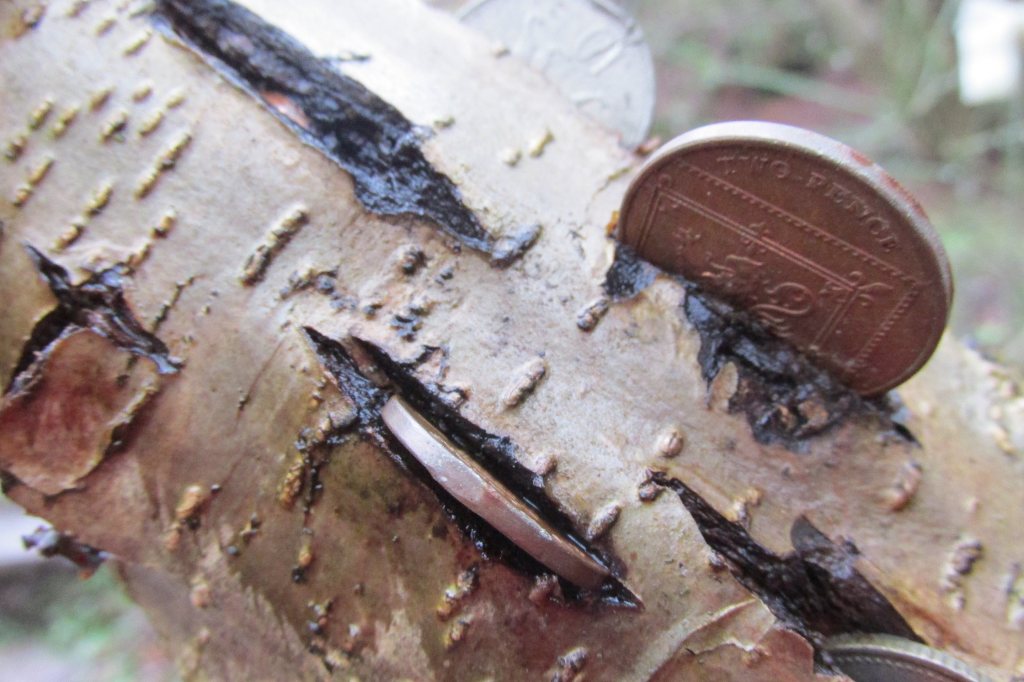
Money tree at Patricio. (Photo copywrite Cath Barton)