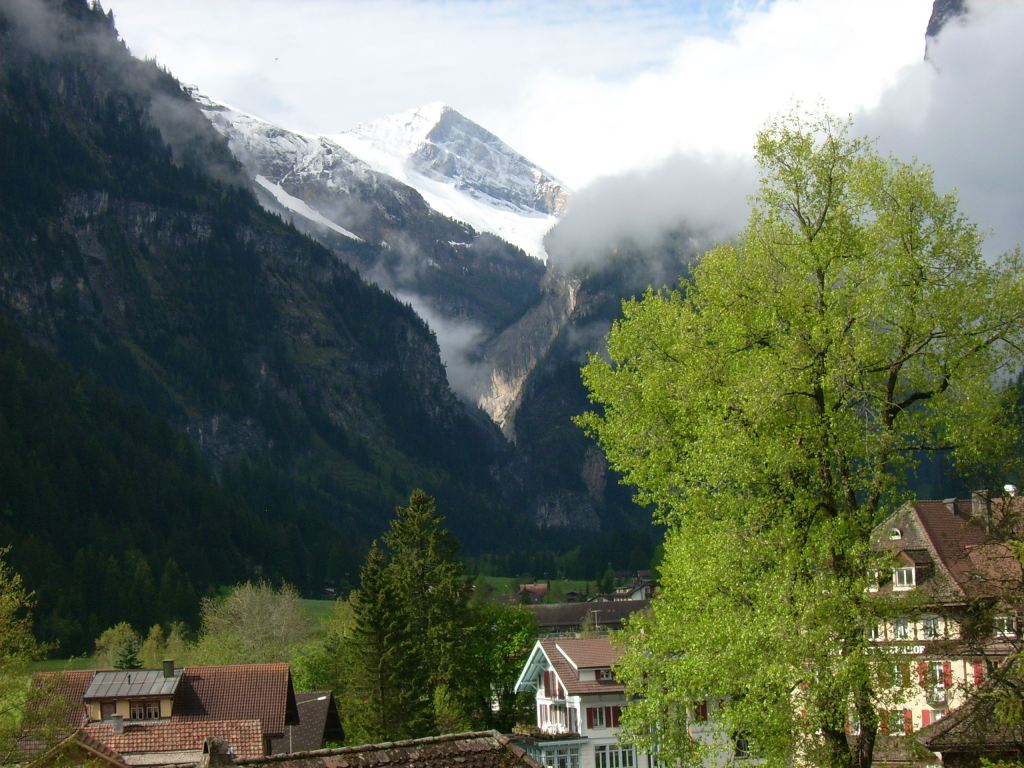
In early 2020, before the Covid pandemic led to the first lockdown in the UK, I started work on a short story inspired by what the media showed us was happening in other countries. This story, At the Hotel Swinburne, was about a married couple holidaying in Switzerland. What happened exposed the cracks in their relationship.
I worked on the story and sent it out to various magazines and competitions, without success, although I received some favourable feedback and encouragement from some. I revised the story, sent it out again, tweaked it some more, sent it out again, and so forth. I believed in this story, even if no-one else seemed to do so.
And then someone did! Stephen Moran, who selects and edits the Short Story of the Month for the Willesden Herald online, said he really liked my story. He asked for some minor edits, which I was happy to make. And he accepted the story as his May 2024 Story of the Month. I am very happy that it has found a home and that you can read it too.
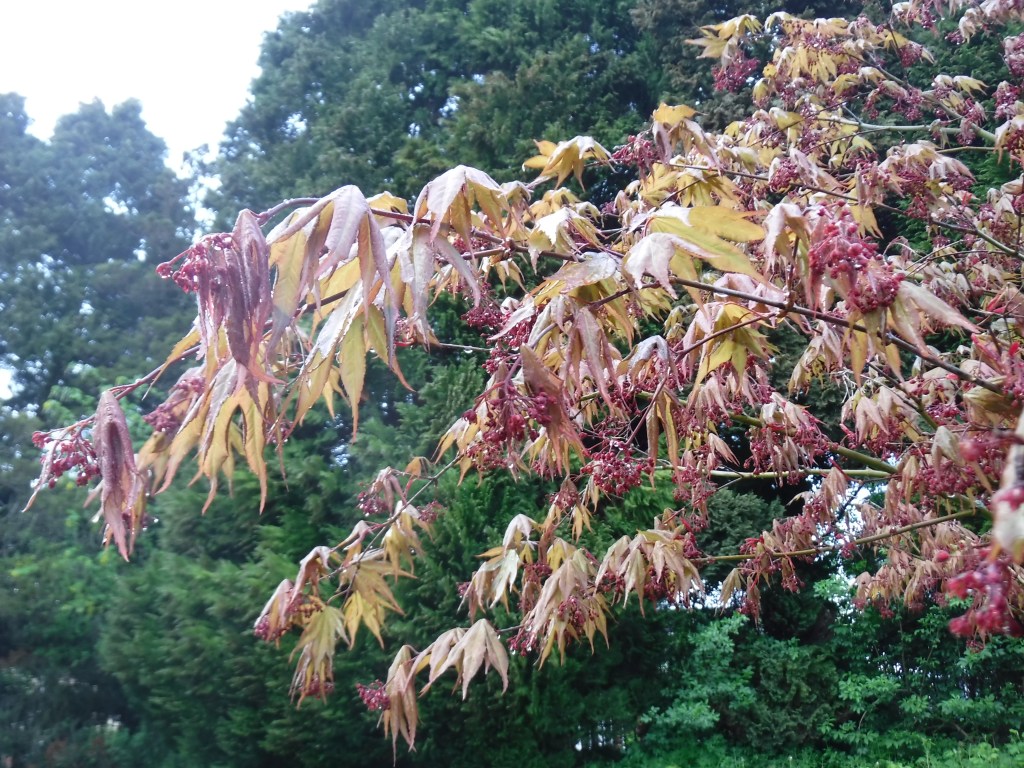
The coming of Spring is always a joy – the variety of colours in the new leaves, and the blossoms. This is the acer in our garden.
In writing: Back to serious work on the next round of edits of my circus novel.
May
Laying in supplies for the Coronation
I’m not an ardent Royalist, by any means, but the coronation of King Charles was such a significant moment in our history, we had to watch it on TV. The music and the ceremonial were both extraordinary. We raised a glass!
In writing: Finished work on Draft 2 of my novel. And was delighted to have my short story , Spawn, published in Fictive Dream, an online magazine which I greatly respect.
June
St Antonin
Back to the English Bookshop in South-West France for a week, this time with my friend Katsy and also husband Oliver.
In the last of my current series of guest posts from authors with new books out, a big welcome to Drew Gummerson with his thoughts on that most crucial aspect of writing – the editing process.
Certain books, written quickly, are infamous; Jack Kerouac’s On The Road, dashed off while on the bog, written in a cramped hand along the length of a single roll of toilet paper(*), Charles Bukowski’s Post Office, 2 weeks in the making, squashed between Bukowski’s bar brawls and unsuccessful attempts at picking up Women(*), (his next book, 3 days later(*)).
(Sequestered once in hotel room Bukowski refused to appear on same bill as one and only Burroughs, William (now he was editor; cut text with scissors, scatter text across floor, shoot heroin, piece text back together. For many years Burroughs carried pages of Naked Lunch (deconstructed / constructed) gripped with single elastic-band in suitcase across Paris / Tangier / Interzone.(*))
But for most of us, as Morrissey sang, These Things Take Time.
(And I know that I’m the most inept that ever stepped…)
The best advice I ever got about editing came backwards through a crude joke on The Inbetweeners. This crude joke was about having a numb hand and masturbation.
It’s better all round if you no longer feel it’s yours. (**)
When I finished the first draft of Seven Nights at the Flamingo Hotel I put it away for six months.
It was only then I had the right perspective to be brutal, see what worked / what didn’t. So I could slash and burn. And, I honestly couldn’t remember where it was going.
It was fresh.
And that’s where the real work started.
In this excellent New York Times article, Jenny Offill talks of how she put extracts of her new novel Weather onto poster-boards and it was only, through time, by looking at them, she could ascertain which ones sparkled, which ones weren’t merely clever.
In that first draft it’s all too easy, like Alice falling down her well, to be pleased with yourself. Time gives clear head to tidy up (delete) these sections which don’t sparkle, aren’t clever (I mean, who wrote this shit?).
On twitter Ronan Hession (writer of the wonderful Leonard and the Hungry Paul(**)) gave the Sound Advice of, when editing, to read the chapters in reverse order. This,
“1. Stops you getting distracted by the story.
2. Reveals a lot about flow… if a book reads well backwards it’s a good indication that it reads well forwards.”
Same as putting text away in drawer it is about finding a different way of looking / disrupting gaze.
His editing process was to write reams and reams of stuff trying to find the character. It was only by writing in character’s voice that the nuggets of genius that made it into the story came out.
Seven Nights at the Flamingo Hotel was written on my iPhone, sitting at my kitchen table, most often before I went to work. Just an hour or two.
Having once been an obsessive writer I made a deal (with myself) a number of years ago that I would keep my evenings free for movies, music, books etc etc etc (wine).
In those few hours, like Offill I ended up with many dozens of pieces / fragments / sketches.
The trick was to work on them work on them work on them and, as Saunders suggests, find the heart of what you are trying to say.
(*) – This is not exactly true.
(**) – This is exactly true.
Drew Gummerson is the author of The Lodger and Me and Mickie James. His latest book, Seven Nights at the Flamingo Hotel, is to be published in November 2020 by Bearded Badger Publishing
As I said in my last post, I’ve been working on edits of my second novella, In the Sweep of the Bay, which will be published by Louise Walters Books in September 2020. You can read an extract of it here.
The editing process has been a very positive and fruitful one. It’s been great to work with an editor who is thoughtful and thorough, and Louise and I have sent edits back and forth several times to get to the point where we’re both happy to send the book off for copy editing. Louise has challenged me on sections where I’ve been a bit too much in love with my own writing and I’ve had to murder a few of my darlings. I’ve also had to work to make some parts clearer – a writer may see something in her/his own mind, but we have to make sure we’ve conveyed it to the reader. But on the other hand Louise has also been sympathetic to my wish to retain certain things, so long as I’ve been able to justify their inclusion. All in all, I’m sure the process has made the book a better one, and for that I’m very grateful.
And, excitingly, we’ve secured the rights to include the lyrics of a song which is very pertinent to the story.
There’s a way to go, but we’re well on the road to publication.
Here’s a selfie of me in my garden room, a haven for writing.
Coming soon: My thoughts about the shortlist for The Guardian’s Not the Booker prize.



 Cath Barton