Guest Post: Anna Vaught on Writing in a Different Genre

In the latest in my series of guest posts by authors of new books, Anna Vaught tells how returning to short story writing in a lull between working on novels proved to be a rejuvenation.

I believe in complicity and its special heat. See what I have. Eat.’

Where, I was asked, do short stories fit into your writing? This is how.

I had written short stories for a blog I kept, entered a couple of competitions, and had had two stories published in anthologies; I also read many short stories of varied provenance, but that was it. Now, in the early spring of 2019, I found myself feeling jaded between projects and unsure what to do, though I thought I needed to do something. My third novel Saving Lucia was placed but still a year away from publication and I was yet to work with my editor; my first two books, autobiographical fiction and novella, had lacked exposure and, partly because of this, I lacked faith in myself to make a new novel do well. I write quickly, so I had already written a follow-up novel to Saving Lucia, but understood that this would not be read for some time, and I had had a couple of meetings with agents who had asked to meet for a chat about what I was up to. One of them, incidentally, is the greatly supportive woman I now refer to as my ‘not-agent’ and the other, the goddess who was soon to sign me on the back of a short story collection I had not written – or even thought of – yet. Possibilities hung in the air, but also a lot of self-doubt. I wanted to keep busy to assuage it.

I decided I would try some short stories again. I had written a good deal about memory, trauma and testimony in fiction and creative non-fiction; I had also written food journalism, was interested in culinary history and, owing to a rather colourful past and many strange familial events in childhood and teenage years which revolved around food, its preparation, purveying and sharing (or not), an idea coalesced: how about a collection of stories involving adventures at table, feasts, consuming and being consumed; about food and trauma. Funny, peculiar, entertaining and with language you could get your teeth into; I would draw on my reading and experience and the rest would be new literary horror and weird to which I naturally incline.

Up bubbled a book, and it came out very quickly. I feel embarrassed to say this: I wrote it in two weeks, in a wonderful fury, sometimes getting up at four to make the stories on top of my other responsibilities. I do not recommend this practice, but it was what I wanted here. I wrote about being held back, being terrified (I know this is weird) by trifle, tripe, and tapas; I drew on old stories, food journals and apocrypha. I wrote on food as metaphor, but also about food as something plainly and brutally literal. I did not know I could do any of this; I only knew that once I had started I did not want to stop and particularly enjoyed the concept of an overarching theme and some overlapping details in terms of characters and psychological or erotic tryst.  I felt rejuvenated. Then, when a submissions window came up at Influx Press – exciting: I had loved Attrib. by Eley Williams and How the Light Gets In by Clare Fisher – I sent it to them (and to the second of the wonderful literary agents I had met at the same time) and, within three weeks, I had both an offer of publication and an offer of representation. I did not know I was capable of that, either.

There might be a moral here: when you feel jaded, lacking in confidence or that sense that you are drifting and want to crack on with something, then try writing in a different genre, as I did. As I said, doing so rejuvenated me. So, try something new (or newish) and you never know. If you lack confidence, do it anyway. I found, having written a collection of short stories, I could move on to another one then another novel – the one I have just finished for my agency. What is more, my follow-up to Saving Lucia has not been taken up for publication, but I am pleased to say that I was able to take a section of that and make it into a long short story about trauma, memory and recovery for an Unsung Stories anthology out next year. I felt more confident in my craft now, so this was something I could do. I also took up disappointment and, from it, I made a new thing, and that is a good thing to learn, because not everything will work and not every book ought to be published. As to where short story writing fits in going forward, I hope I will always be able to write short story collections and novels, though I know that stories are a harder sell for my agent. We shall see. It will be an adventure, won’t it?

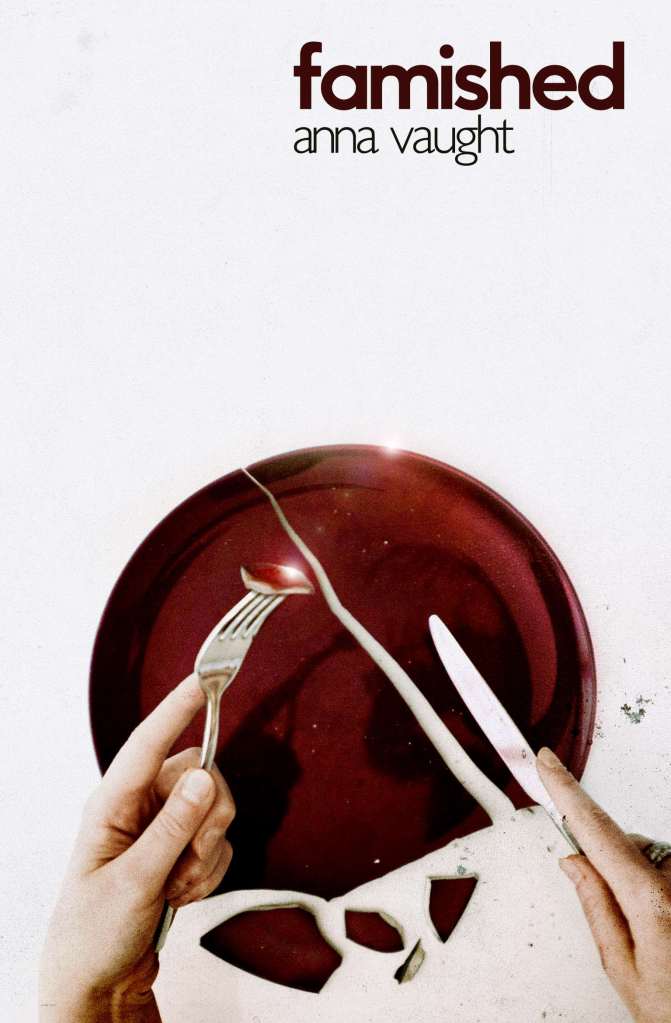
Famished: seventeen stories to whet your appetite and ruin your dinner. I hope you like them.

I believe in complicity and its special heat. See what I have. Eat.’

Anna is a novelist, poet, essayist, short fiction writer, editor and a secondary English teacher, tutor and mentor, mental health advocate and mum of 3. 2020 sees the publication of Anna’s third novel Saving Lucia (Bluemoose) and a first short story collection, Famished (Influx). Anglo-Welsh, she splits her time between Wiltshire, Wales, and the Southern US, where her husband is from. She is currently finishing a new novel and waiting on exciting decisions. Anna is represented by Kate Johnson of Mackenzie Wolf, NYC. 

www.annavaughtwrites.com , Twitter: @BookwormVaught, Instagram: bookwormvaught6
Anna Vaught

Famished is available from all good bookshops or from Influx Press website, where you can also subscribe – a great way to support an independent press. 
https://www.influxpress.com/books
and https://www.influxpress.com/subscriptions
Update, update, update

It’s a pleasure to welcome guests onto my website, and this month I have two – look out for words from the remarkable Anna Vaught on 28th August.

It’s about time I updated my Stories page, so I’ll be getting on with that this week….

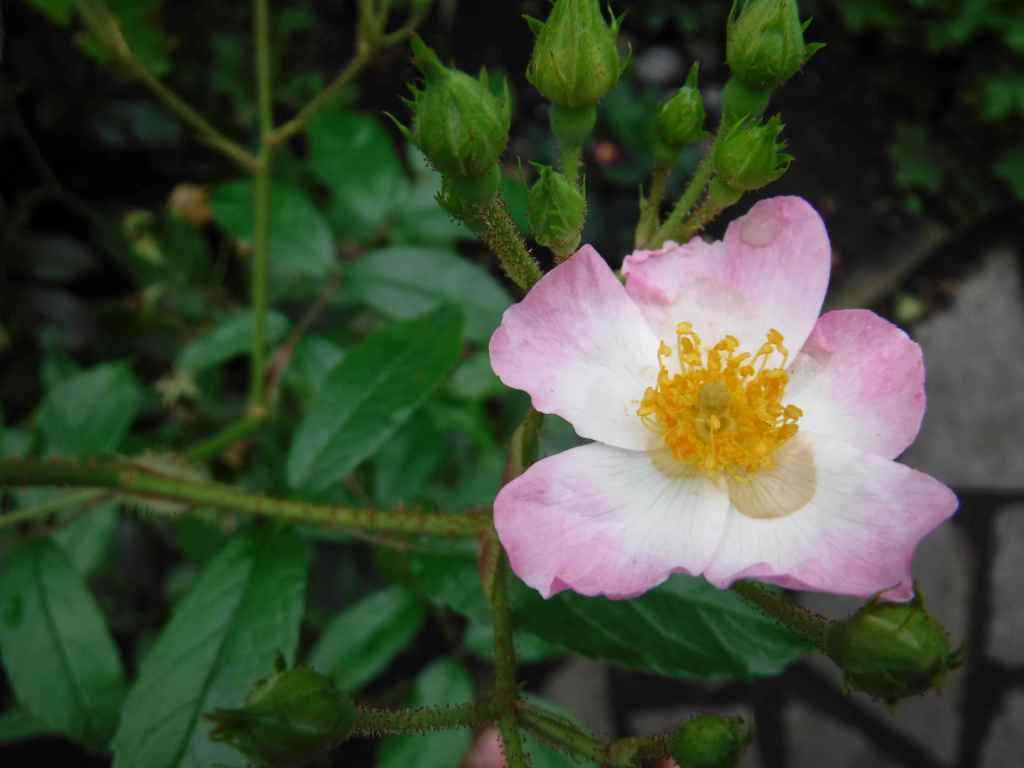
Meanwhile, here’s a picture of a rose. Happy Monday, all.

The heart of a rose

Photo copyright Cath Barton

Guest Post: Dominic Brownlow on the Potency of Location

In the latest in my series of guest posts from authors of new books, Dominc Brownlow discusses how, in his writing, he uses location as more than simply a setting.

Location, surprisingly, is often underused in writing. All books and stories possess one or more of them; characters can’t simply float through space, levitating from one scene to the next. They must be placed somewhere, like actors, in order to play out the intended narrative, but once that stage has been decided upon, the backdrop painted, the curtains raised, the role of that setting should not then be over. Location should be treated as a character and accorded the same luxuries. And, most importantly I think, used as one of the senses.

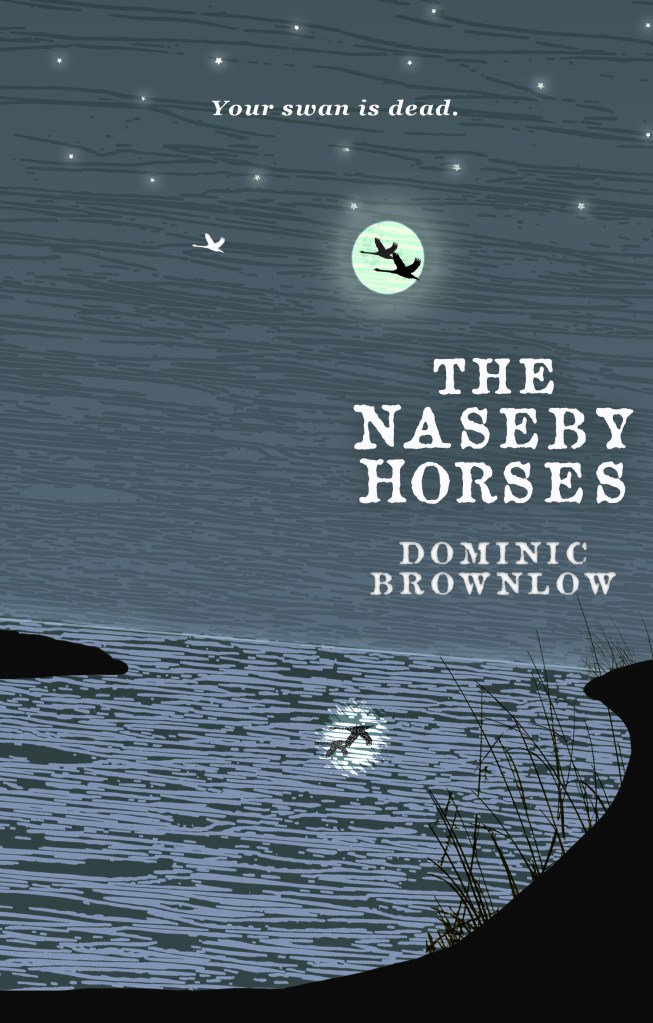
When I wrote The Naseby Horses I had a post-it-note above my desk reminding me not to ignore these essential faculties: touch, smell, colour, sound. It is still there now as I write my second novel, the ink a little faded from the sun. Isolation is a fundamental aspect of my writing – I’m only on novel two but they are both centred around this theme.

For me, it is the Fens; huge open swathes of flat agricultural land stretched beneath wide infinite skies. That, in itself, is fairly self-explanatory. It is an obvious stage for remoteness. However, it is the perceptions evoked beyond remoteness that can, if you invite them in, assist the story so. It is the way both the landscape and its inhabitants behave; the attitude of locals, the manner in which nature and wildlife react, and how this effects, or is used by, the characters in the novel.

The same method could be employed with a major city, or beach or mountain or alien spacecraft. All these locations are in possession of sound, smell, colour, touch, as, similarly, is a kitchen, bedroom, school, garden, sports field or courtroom. By introducing the sensual nuances of a location a writer is, by default, connecting the character to that place, and, in the same metaphorical vein as how pathetic fallacy works, eases these perceptions into the subconscious of the character and, hence, reader.

Show not tell” is the axiom waved about like Colours in the How To Write books, and one, as a literary waffler, I struggle with the most. However, by describing the mood and essence of a setting, wherever that may be, as long as an initial connection has been made between place and person, the writer is, in part, showing not telling. He, or she, is using location as the shadow of the character. One of my favourite lines in The Naseby Horses is ‘somewhere in the distance sunlight glares off a moving car.’ I like to think this issues a latent sense of escape from a desolate backdrop, without actually saying it.

John McGregor’s Reservoir 13 uses this brilliantly and, of course, the ultimate example of how to use location as a character is Hemingway’s The Old Man and The Sea. Ray Robinson is also a modern day master of this in The Mating Habits of Stags, and for the claustrophobic seedy panicky senses of the city Martin Amis’s London Fields excels beyond all.

Dominic Brownlow lives near Peterborough with his two children. He lived in London and worked in the music industry as a manager before setting up his own independent label. He now enjoys life in the Fens and has an office that looks out over water. The Naseby Horses is his first novel. It was long listed for the Bath Novel Award 2016. The paperback edition is published on 24 August 2020. He tweets @Dominic Brownlow.

Dominic Brownlow
The Naseby Horses is available direct from the publisher, https://www.louisewaltersbooks.co.uk/

Guest Post: Amanda Huggins on Killer Short Stories

In the latest of my six-month series of guest posts from authors of new books, Amanda Huggins gives some tips for fledging short story writers.

If you want to write killer short stories, then one of the most important things to do is to read killer short stories. Lots of them. It sounds obvious, yet I often meet blank looks when I ask writers who are new to short fiction to name their favourite short story writers. Short stories aren’t novels-in-miniature, any more than novels are extended short stories. They are two different skill sets, and the best way to get started is to read the masters.

A great short story needs to plunge straight in with no preamble. It should have conflict, a strong ending, a limited cast of characters, and every word should count. (If only I stuck to those rules myself!)

I have countless favourite short story writers and the collections on my shelves include books by William Trevor, Tessa Hadley, Helen Simpson, Helen Dunmore, A L Kennedy, Wells Tower, Stuart Evers, Miranda July, Yoko Ogawa, K J Orr, Ernest Hemingway, Taeko Kono, Haruki Murakami, Richard Ford, Alice Munro, Flannery O’Connor, Anton Chekhov, Annie Proulx, Isaac Babel, Angela Readman, and A M Homes.

A recent delight was Helen Dunmore’s posthumous collection, Girl Balancing, and I particularly loved the first section of the book, ‘The Nina Stories’. These stories are almost notes for a novel-in-waiting; a sequence of vignettes centred around a girl called Nina, set in the 60s/70s. They are painstakingly intense; attention is paid to Nina’s every moment and action, and there are some lovely period details that evoke a strong sense of place. The writing turns the mundane into something beautiful, and the final story soars. Seventeen-year-old Nina is left alone on Christmas Day in a house at the seaside. She goes roller skating along the seafront with her friend, Mal, and when the mood turns, she must outwit him. I’ll leave you to find out for yourself if she succeeds.

I’d also recommend having several pieces of work out there at any given time. If you only submit one story and then wait patiently for it to be rejected/accepted, when that rejection comes it will hit hard. If you have ten or twenty pieces out at any given time then the rejections won’t feel as bad.

Never forget that the opinions of editors and judges are subjective. So be persistent! My story ‘Red’ was a runner-up in the 2018 Costa Short Story Award, but had already been rejected by a couple of magazines and failed to reach the longlist of three smaller competitions.

Sadly, despite an encouraging rise in sales of short story collections, it’s still difficult to get work published anywhere for hard cash. That’s why prizes and awards are so important to emerging short story writers, and why I still enter most of my stories into competitions first.

Lastly, really take note of feedback. It’s all too easy to reject criticism, yet in my experience the advice of a good editor is nearly always sound.

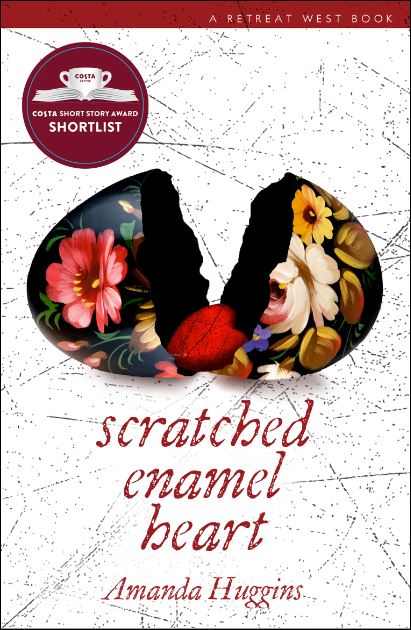
Amanda Huggins is the author of four collections of short fiction and poetry. She was a runner-up in the Costa Short Story Award 2018, and her prize-winning story, ‘Red’, features in her latest collection, Scratched Enamel Heart. Her poetry chapbook, The Collective Nouns for Birds won the Saboteur Award for poetry in 2020. Amanda grew up on the North Yorkshire coast, moved to London in the 1990s, and now lives in West Yorkshire.

Blog: https://troutiemcfishtales.blogspot.com/

Twitter: @troutiemcfish

Amanda Huggins
Scratched Enamel Heart is available from Amazon: https://www.amazon.co.uk/Scratched-Enamel-Heart-Amanda-Huggins/dp/191606938X/ref=sr_1_1?dchild=1&keywords=scratched+enamel&qid=1589632869&s=books&sr=1-1


Guest Post: Ali Thurm on A Room of My Own

In the second of a six-month series of guest posts from authors of new books, Ali Thurm introduces us to her writing life:

Where I write

Six months ago I moved from a large family house where I had my own ‘writing room’ to a flat. Apart from when my daughter comes home from university, I now have a whole flat to write in. I can write wherever I want.

I need to see real people, especially working on characters, so my pc is set up in the bay window overlooking the street. I sometimes use my laptop at the back of the flat, where I can see the garden. It’s completely secluded but as I’m also passionate about gardening the temptation to go out and do something/anything in the garden can get too much. Like a restless child desperate to go out and play.

What’s on my desk

Sharp HB pencils and biros (Paper-mate Inkjoy). A visual reminder of the tools of being a writer, and a remnant from my days as a primary teacher. I love sharpening pencils – a preparing (some might say delaying) strategy – the smell takes me right back to a summer working in the Cumberland Pencil Factory in Keswick.

A Christmas cactus with Barbara Cartland shocking pink blooms once a year.

An almost spherical glass paperweight full of bubbles.

My prize possession – a Howard Hodgkin postcard Bombay Sunset with stripes of gorgeous orange, red and green signed by Julian Barnes. A reminder that all writers are human; and how good it is to connect with writers you admire and future readers who’ll enjoy your own writing.

How I write

When I’m at the first draft stage, generating new writing, I write long hand in an ordinary notebook with a biro or pencil. I write the scene I’m most interested in at the time. For me there’s something about cursive writing – the fact that letters are joined together – that makes new writing flow more easily than the staccato tap-tapping on a keyboard. This kind of writing can take place anywhere – train, café, park (pre-lockdown). At home I sit on an old 1920’s sofa with a drop-down arm so I can recline like Elizabeth Barrett Browning.

Editing is all on screen – I’m on the third draft of what is actually novel number three, so at the moment I’m mostly at the pc.

When I write

A typical day starts by a walk around the garden (it’s a small London garden so that doesn’t take long!) looking at the natural world and breathing in fresh air. If I’m on a roll with my writing I might head for my desk at 8.30 but usually I work 10 – 1 then 4 – 6. The afternoon is for exercise (yoga, walking, swimming and gardening). The evening for friends/family and reading or films. But there’s also volunteering – a writing club for children and community gardening – and Twitter of course. There isn’t really a typical day!

And in this strange time

During lockdown I struggled at first to do any writing apart from a few writing exercises of 10 minutes a day and spent a lot of time out in the garden or on the phone to friends/family. For the last few weeks I’ve started editing my novel The River Brings the Sea, a dystopian story of a group of people surviving in West Cumbria after a catastrophic flood. You can see why it’s been difficult to pick up where I left off, and I’m not sure how many people will want to read it after surviving Covid 19. But it’s a hopeful narrative where kindness and community spirit win in the end.


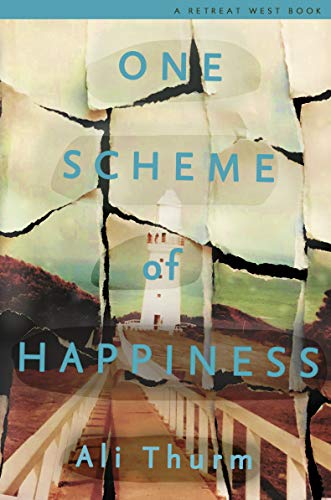
Ali Thurm is a novelist, poet and teacher. After balancing a career in primary teaching with writing part time, she was taken on by the literary agency Emily Sweet Associates in 2016. Her debut novel, One Scheme of Happiness was published in February 2020 by Retreat West Books. You can follow Ali on Twitter @alithurm and her website is  https://alithurm.com

Ali Thurm
One Scheme of Happiness can be ordered at your local independent bookshop or from: Amazon  http://amazon.co.uk/dp/1916069320/ and 
Waterstones https://www.waterstones.com/book/one-scheme-of-happiness/ali-thurm/9781916069329