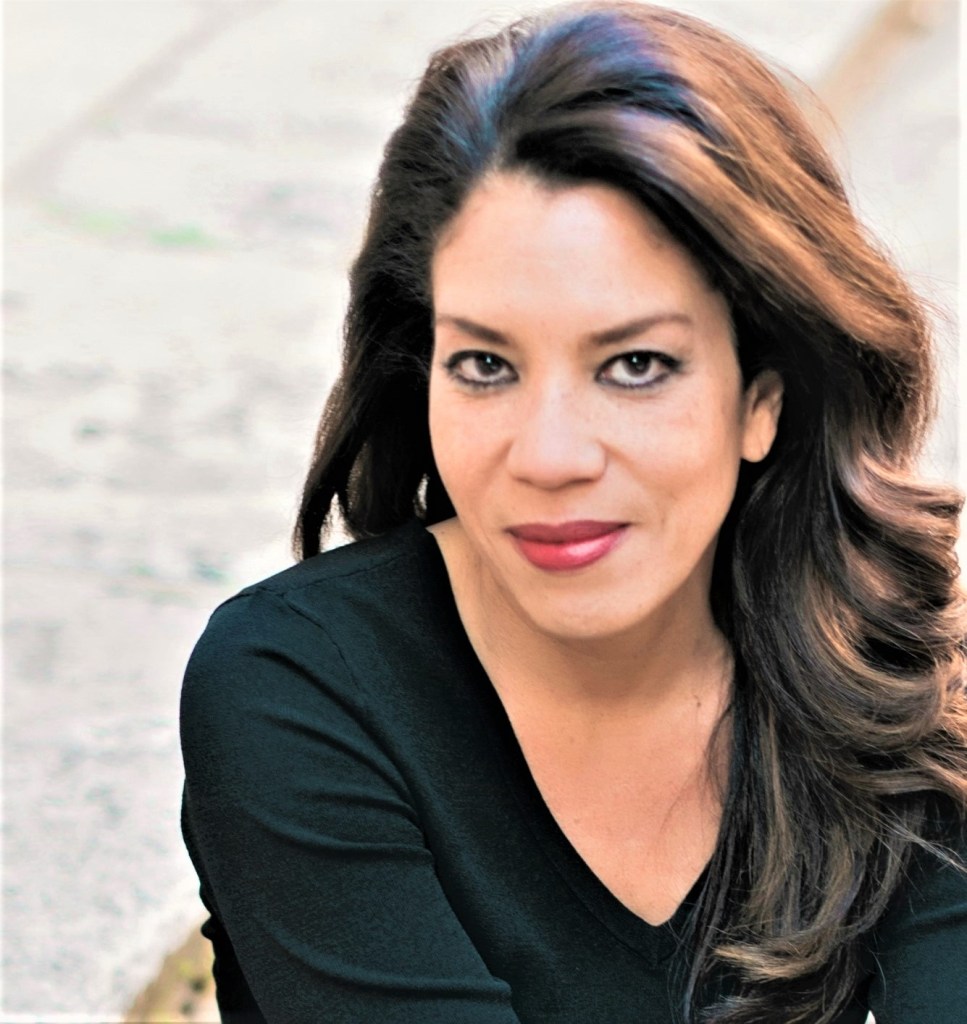
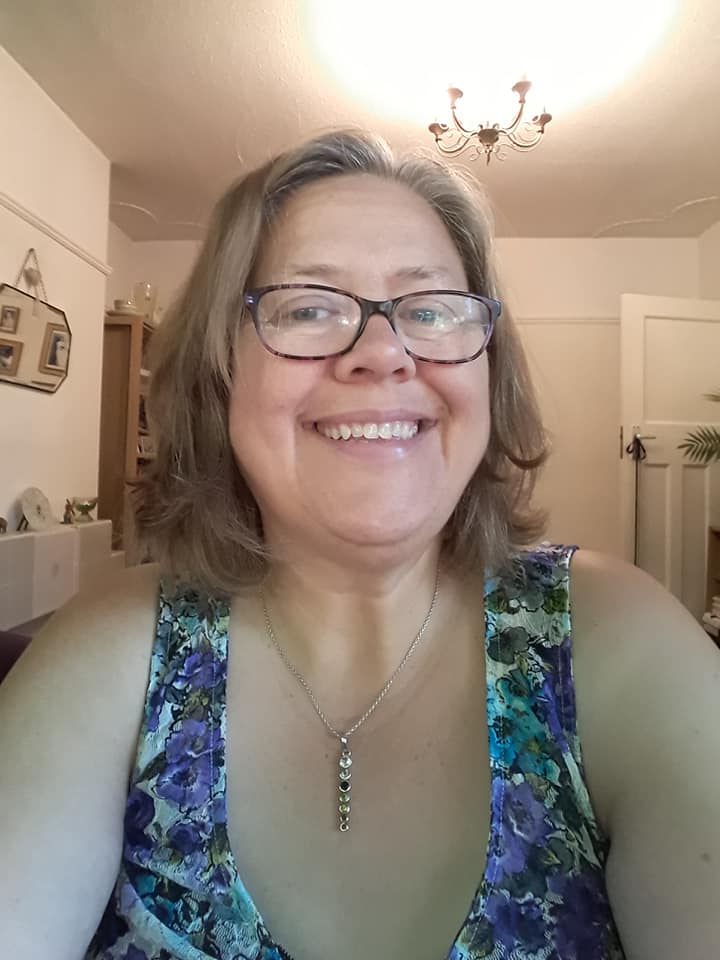
Author Interview: Mandira Pattnaik

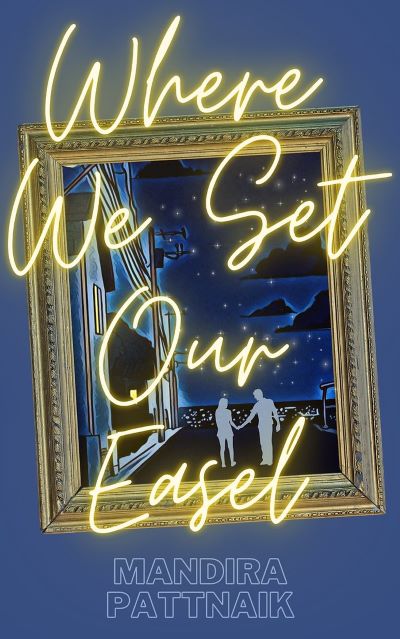
Although I live in South Wales and Mandira Pattnaik in India, our paths have been criss-crossing on the global flash fiction stage for several years, and I am very happy to invite readers to celebrate with me the upcoming publication by Stanchion of Pattnaik’s novella-in-flash Where We Set Our Easel.

The work is a kaleidoscopic riff on the nature and passage over time of love between a man and a woman. Rich in metaphor and imagery, it is – like all good flash fiction – as powerful for what it leaves unsaid, inviting the reader to develop their own pictures of relationship, its challenges and rewards. Using techniques of time-shift, repetition and cut-up, varying pace and mood and working her texts with the precision of a scalpel, Pattnaik has created a shining, multifaceted gem.

Mandira Pattnaik generously agreed to share her reflections on the writing of the book, and to answer some other questions which intrigued me. Here’s what we talked about across the ether:


Cath Barton: Can you tell readers a bit about the inspiration for the stories which, together, make up Where We Set Our Easel?

Mandira Pattnaik: Thank you so much, Cath. Where We Set Our Easel developed from a micro fiction piece I wrote during UK Flash Fiction Festival last year based on a prompt. The prompt was the Van Gogh painting ‘Café Terrace at Night’. I submitted the piece later and it was published in April, 2022 in Canadian publication Commuterlit. The idea of a young, somewhat naïve, couple, deeply in love, walking through the painting into a dream-like world, metaphorically in an imagined future they see together, and then discovering where their life takes them, appealed to my sensibilities. The stories that I subsequently wrote form the arc of that relationship. In this novella-in-flash, written entirely in stand-alone micro prose, the pieces double up as the novella’s chapters. The narrative peeps into the couple’s ordinary lives here and there, chronicling their difficult situations, work and children, trivial misunderstandings, bitterness, parental concerns and accidents, while taking time jumps trusting the reader to fill in the gaps with imagined details. Where We Set Our Easel, true to its title, I believe, is a story of two lives well-lived that can only be possible because of deep and true love.

CB: Congratulations on being published by Stanchion. How did this come about?

MP: Stanchion had already been publishing gorgeous magazines, and when the call for manuscripts was announced, I really wanted to submit. This work was written and completed in the brief interval between that announcement and the call submission window opening. I submitted it in the open reading period and was hugely grateful when it was selected. As you may understand, for a writer from India, being published at all is difficult, let alone a book, that too by a publisher based in the US for an international readership. Now, I’m all jittery and ecstatic and unbelieving that Where We Set Our Easel is soon going to be out there in the world, through Stanchion Books as well as Barnes & Noble. I’m taking time off to let the feeling sink in.

CB: I think your title Where We Set Our Easel is so evocative and appropriate. And titles add so much to flash fiction. Do you start with titles or do they emerge later in the writing process?

MP: Titles do add so much to flash fiction, in fact, to any book. As a reader, no matter what subject or genre, I’m drawn to titles that are brief, evocative and memorable. Similarly, when titling a piece of mine, I’m looking at these attributes. However, it is easier said than done. Sometimes it is a stroke of luck to find the title at the outset or during the process of writing. At other times, it’s an uphill task, with the piece going through several revisions and at least one title change.

For this novella, the title emerged from the opening story (it was published under the same title in Commuterlit a year before). I later decided to rename the opening story and use the title for the entire novella. I hope readers find it as evocative of a starting point full of possibilities. I’m also hoping it makes readers curious about the course my characters will follow. Further, I’d like to believe this title, combined with the reading of the opening story, will suggest a lot many different paths, each with a range of outcomes, akin to what walking into a frame will possibly generate. As recent readers who have had a sneak peek say, they’ve been impatient to learn what transpires beyond the framework where I’ve set the easel!

CB: Your stories are strongly visual. Who are your favourite artists?

MP: I think I tend to write in a way that the reader can visualize the setting. I love natural surroundings and they are often the stage for my stories. My favorite artists are too many to name. Van Gogh of course is somewhere on the top of that list.

CB: You’ve been widely published over the past few years. But do you have an unfulfilled writing ambition?

MP: I’m very thankful for the love my work has received over the last couple of years or so. I have enjoyed writing since when I was very young, but as is the case with most people, work and family took precedence. I started writing again in 2018 with no publications that year and very few in the next. However, some amazing places accepted my writing 2020 onwards and this is where I’m now, happy with what I am doing. I never set out to be a writer. I’m not a very young person, so I guess I’ll take it one at a time, not planning too much ahead.

CB: Who would you say are your greatest teachers?

MP: Readers may not know this but I graduated in Economics and I am a trained accountant and auditor. However, I’ve not been enrolling into writing workshops/mentorships and the like for a variety of reasons. More or less, I’m on my own — tripping, falling, and charting a journey I cherish. My greatest lessons come from reading others, from observing and from trial-and-error.

CB: If you were castaway on a desert island what one book would you take with you and why?

MP: I’m not sure! I have many on my TBR list, and can’t decide on which to pick. I’m currently reading Seven Moons of Maali Almeida by Shehan Karunatilaka. I don’t know which book to go for next. I read a variety of genres, and usually mix my reading to include science, history, even electronics and geography.

But probably I’ll just take my notebook instead, and write while I’m there!

CB: If you could choose one writer (living or dead) to spend an evening with, who would it be, and what would you like to say to them?

MP: James Joyce. I’m a huge admirer of his writing. I think I know Dublin like it was my city because of the way Joyce describes it. I suppose the admiration comes also from the similarities of Dublin with places in India I have lived in, from shared sensibilities and from the attention to detail that’s the hallmark of Joyce’s stories. But I’d probably be too tongue tied to say anything if I met Joyce.

CB: Have you got a flash fiction you would like to share with readers here?

MP: Embryonic Star – this was published in the Irish flash fiction journal Splonk).

CB: Is there anything I haven’t asked you that you’d like to share with readers?

MP: Perhaps regarding Where We Set Our Easel: whether the time-jumps I mentioned earlier in our conversation are something that I planned consciously? My reply would be: Time is eternal and at the same time slippery — this is part of our ancient Indian texts and philosophy. In this respect, for a novella-in-flash, time could be compressed into less than fifty pages without compromising on any of the pulls and emotions that a novel promises. I wanted Where We Set Our Easel to have the arc and timeline of a novel, follow the characters through a lifetime’s journey and satisfy the reader in its resolution, and yet shrink itself to within a novella-length work. It wasn’t difficult to do that, letting myself glide, and skim, and peep into the couple’s life. Given flash is a genre I have written in the most, and am definitely comfortable in, I am delighted the novella-in-flash took its present shape.

CB: Can you say a little more about how the notion of time being at the same time eternal and slippery features in ancient Indian texts and philosophy? Give an example perhaps.

MP: As I mentioned before, the constraints of writing a novella entirely in micro prose doubled the challenge of managing time-frame and setting within which I’d allow my characters to thrive. I also had to ensure that the narrative would progress such that it defined a satisfactory arc for the reader. With this objective, I had to compress time at places in the novella, and yet, at other points, I had to portray time as eternal and everlasting for certain relationships and emotions.

It helped that as an Indian, I am drawn to thought-schools and philosophy about the duality of time. For example, time is cyclical in the cosmological context, but linear for determination of events. Time is regulated by the motions of the sun and moon, and in the same vein, boundless for life as it exists on the planet itself. In the epic Mahabharata, for instance, Time is compared to a stage manager or Sutradhara. Here, Time is personified as a force that controls the performance of a puppet show according to his wish. The whole cosmos is thought of as a grouping that is subservient to the control of the puppet-master Time. I believe some of these notions do percolate into my writing.

CB: What a fascinating note on which to end, Mandira. Thank you so much for taking time to talk, and I wish you all the best with Where We Set Our Easel.

Bio: Mandira Pattnaik is the author of collections “Anatomy of a Storm-Weathered Quaint Townspeople” (2022, Fahmidan Publishing, Poetry), “Girls Who Don’t Cry” (2023, Alien Buddha Press, Flash Fiction) and “Where We Set Our Easel” (2023, Stanchion Publishing, Novella). Mandira’s work has appeared in Flash Frontier NZ, The McNeese Review, Penn Review, Quarterly West, Citron Review, Passages North, DASH, Miracle Monocle, Timber Journal, Contrary, Watershed Review, Amsterdam Quarterly, Quarter After Eight and Prime Number Magazine, among others. She edits for trampset and Vestal Review. More at mandirapattnaik.com
Mandira Pattnaik

Author interview: Mandira Pattnaik – preview

The Indian author Mandira Pattnaik’s novella-in-flash Where We Set Our Easel is published on 23rd May.

I talked to her about her book and her writing life.

As a taster here’s what she has to say about time:

Time is eternal and at the same time slippery — this is part of our ancient Indian texts and philosophy.

Come back on Friday, 19th May, and read our full conversation, including how that notion of time informed Mandira’s approach to writing a novella-in-flash, and how the picture below comes into her book.

Café Terrace at Night by Vincent Van Gogh

In conversation with Charmaine Wilkerson

It’s wonderful to have support from other writers. In the run-up to publication of my new novella, I had the great pleasure of talking with the brilliant writer Charmaine Wilkerson, who I have got to know through the international flash fiction community.

CW: Cath, it was a pleasure to read through your lovely novella, In the Sweep of the Bay. Your story spans decades and generations within the life of the family at the centre of this story with such finely textured language and profound insights. How would you describe this novella in one line?

CB: It’s the story of a long marriage and the persistence of happiness, in spite of all obstacles.

CW: Where did the idea of the couple at the centre of the story, Ted and Rene, come from?

CB: I don’t know! Did I see a couple like them, in that café on the seafront in Morecambe that they visited on a day out? I wonder. Certainly I went to that café, and the scene was the first section of the book that I wrote, a snapshot of Ted and Rene in later life. It was a stand-alone flash originally and I called it Keeping the Magic Alive. Thinking about it, that could have been the title of the book – it’s what’s at the core of it.

CW: One of the things I appreciate about all of your writing, not only in this novella, is your use of small, telling details in a story. Often, those details evoke a sense of place, not the least of which is the English bay, Morecambe, which is referred to in the title of the story. Which element tends to come first in terms of inspiration for your story ideas- location, character, or event?

CB: Character, I think, always. Or rather, characters moving through their lives. I see the action scrolling out like a film. You know how in a film you can ‘read’ the characters’ emotions on their faces? That’s what I hope I can conjure up for reader in prose.

CW: In this novella, the sense of place includes the interior settings evoked through your storytelling. The buzz of comradeship at the ceramics factory, the coat shop, a hotel lobby, a marital bed. Do these details just come to you in the writing or do you find you take notes in your daily life which then lend themselves to story scenes?

CB: I do wish I was good at keeping notes, because we are surrounded by characters for stories as we walk down the street, any street, on any day. But I don’t carry a notebook. I do take photographs, though; I think I have a strong visual sense, and (I hope) good intuition.

CW: The end of the story is intriguing. I don’t want to give it away here but I do want to mention that it leaves the reader thinking, is this based on a true story?

CB: No, this is pure fiction.

CW: You frequently publish short stories, in particular, flash fiction? What about your longer projects? What can readers expect to see from you next?

CB: I like the shorter forms, novella, short story, flash fiction. I used to say I’d never write a novel. But I have a couple of longer projects. One is a novel I started in NaNoWriMo in 2018, set in Nepal in the aftermath of an earthquake. The other is what think will end up as a novel based on the life of my Auntie Phyllis, who was a famous circus artiste. I feel a responsibility to write her story. Though, unhelpfully, she left few words, only pictures, so what I write has to be fiction.

However, I may just write another novella – or even two! – first. I do seem to have an affinity with the novella form. I’ve tried writing novellas-in-flash without success, but I’m thinking of having a go at a novelette-in-flash, in which each separate story is under 500 words. I’m taking advantage of Nancy Stohlman’s prompts for FlashNano this month to help me with that.

In the Sweep of the Bay is available for order through independent publisher Louise Walters Books.

Charmaine Wilkerson

Charmaine Wilkerson is an American writer who lives in Italy. Her award-winning flash fiction can be found in Best Microfiction 2020 and numerous anthologies and magazines. Her story How to Make a Window Snake won the Bath Novella-in-Flash Award in 2017 and the Saboteur Award for Best Novella in 2018. Her debut novel Black Cake is due to be published in 2022.

Guest Post: Sal Page on her writing journey

It’s been a while since I’ve had a guest on the site. Today I welcome Sal Page, with her thoughts on writing.

Writing and Me

Ah writing! This is something I do. I’ve tried to stop. Several times. I once wrote nothing but work stuff for four years. That horrible job. But it’s not a nice way to live. I missed it. I like having a story on the go, or two or three. Or the occasional poem or even a play. A novel, or two or three, that may never see the light of day but boy, did I enjoy writing them. And, yeah maybe writing helps keeps you sane.

Not that I call myself a writer. I’m just someone who writes.

I don’t believe, as many seem to, that when writing you have to suffer. I know it’s tough writing a novel synopsis but, if you’re talking blood, sweat and tears, I could tell you about all those from working in kitchens for thirty-plus years.

Neither do I think there’s ever going to be any money in it for me, although obviously on the odd occasion we mention writing to those that don’t, we’re suddenly going to be ‘the next JK Rowling’ so there might be some cash involved there.

The truth is I’ve made just over £700 from writing … since 1986. Yes, I’ve been writing for some time. I make close to that per month now, as a part time cook. So, I’m a cook and someone who writes.

Recently, I’ve been leaving flash, stories and novels behind, in favour of memoir and non-fiction. I’ve started writing my weight loss memoir/self-help book, The Impossible Thing. (#TheImpossibleThing, my own hashtag!) In the past three years, four months I’ve lost 101 pounds (7 stone 3). I’m aiming to lose 130 pounds and to keep it off. Then I’ll be qualified to finish this book and maybe it will, somehow, reach a few readers. Sal Page solves the obesity crisis single-handedly.

The next chapter I plan to write is a memoir one about being at school. In the spring of 2017, I wrote a blogpost that listed the names I got called at school. This was quite a moment. I could never have dreamt I’d go from being deeply ashamed and embarrassed and not telling a soul to telling, effectively, the world.

I love everything about writing. Having ideas, thinking about them, writing notes, getting stuck into a first draft, letting things lie, talking about writing on Twitter, reading other people’s work and putting my spoke in, redrafting, editing, tinkering, perfecting, submitting, having things accepted or rejected, getting listed, placed, winning, reading in open mics or being invited to read ‘cos I’m placed or the winner. I love the little shelf of anthologies with my stories in, my Amazon page and rereading things I wrote years ago and still love ‘cos they’re mine.

Why do you write?’ is a question often asked on Twitter. My answers are always ‘It can stop me thinking about food’, ‘I can create a world and control everything in it’ and ‘It’s FUN.’

Yeah. Writing. What’s not to like?

Thanks to Cath for inviting me to write this piece for her website.

Sal Page

Sal Page

Guest post: Interview with author Mike Scott Thomson

It’s good to hear different voices on the site. Here’s what English author Mike Scott Thomson has to say about his writing:

CB: I’ve read and enjoyed your stories in Visual Verse – you obviously like responding to pictures and do so imaginatively and in vivid prose. Have you used picture prompts much for other stories you’ve written?

MST: Thank you for your kind words, Cath. For me, picture prompts have provided a useful exercise in letting those creative energies flow: to build a brand new story, which I might not have thought to write otherwise. They can also provide fresh ideas, boost confidence, and are a brilliant method to get that keyboard tapping. I should use them more often.

What other kinds of stimuli do you use for your writing?

My fictions tend to arise from all sorts of different sources: perhaps a blurry, re-imagined glimpse from hazy memories; perhaps an overheard snatch of conversation, or an intriguing bon mot, stripped of its original context; however, instead it often comes from a slab of bureaucratic lunacy to which I cannot help but administer a good old British lampooning. For example, my story which won the inaugural ‘To Hull and Back’ humorous short story competition stemmed from an occasion at work where we were made to express our activities as a fraction of an integer onto a timesheet coded with 14 different colours, then upload them to a shared disc drive defined by a dollar sign, a wiggly squiggle and a pair of square brackets. Figuring out what that meant proved fruitless for the purpose it was intended, but I did get a good comic story out of it.

Of the books you’ve read this year, which one would you most recommend and why?

Jasper Fforde’s ‘The Eyre Affair’, and also its first three sequels. They’re full of literary references, are extremely funny, and Fforde himself is a superb plotsmith. Prior to reading them, I ploughed through Charlotte Bronte’s ‘Jane Eyre’, under the impression some background knowledge would be helpful. As it turned out, that wasn’t entirely necessary; his books are a good way to glean a broad understanding of the classics without having to embark on marathon reading sessions. (That said, I did like Jane Eyre too.)

If you could have three wishes granted for your writing, what would they be?

Well, I’m still haunted by the events of W.W. Jacob’s ‘The Monkey’s Paw’, having first read it decades ago. If I did indeed wish for flawless first drafts, a lucrative lifetime publishing deal, and hundreds of millions of impatient and adoring readers, then what macabre consequences would accompany such desires? (Besides, it’d be cheating.) Instead, I’d wish to become more of a morning person (so I can fit in writing shifts before starting the commute), an approximate 10% increase in self-confidence in my writing ability (too much would be damaging, I feel), and a fervent desire that nobody in the world – ever, ever again, ever – misspells my surname with a ‘p’.

Mike Scott Thomson.PNG

Bio: Mike Scott Thomson’s short stories have been published by journals and anthologies, and have won or placed in a few competitions, including ‘To Hull and Back’, InkTears, and Writers’ Village. Based in south London, he works in broadcasting. You can find him online at http://www.mikescottthomson.com and on Twitter at @michaelsthomson.